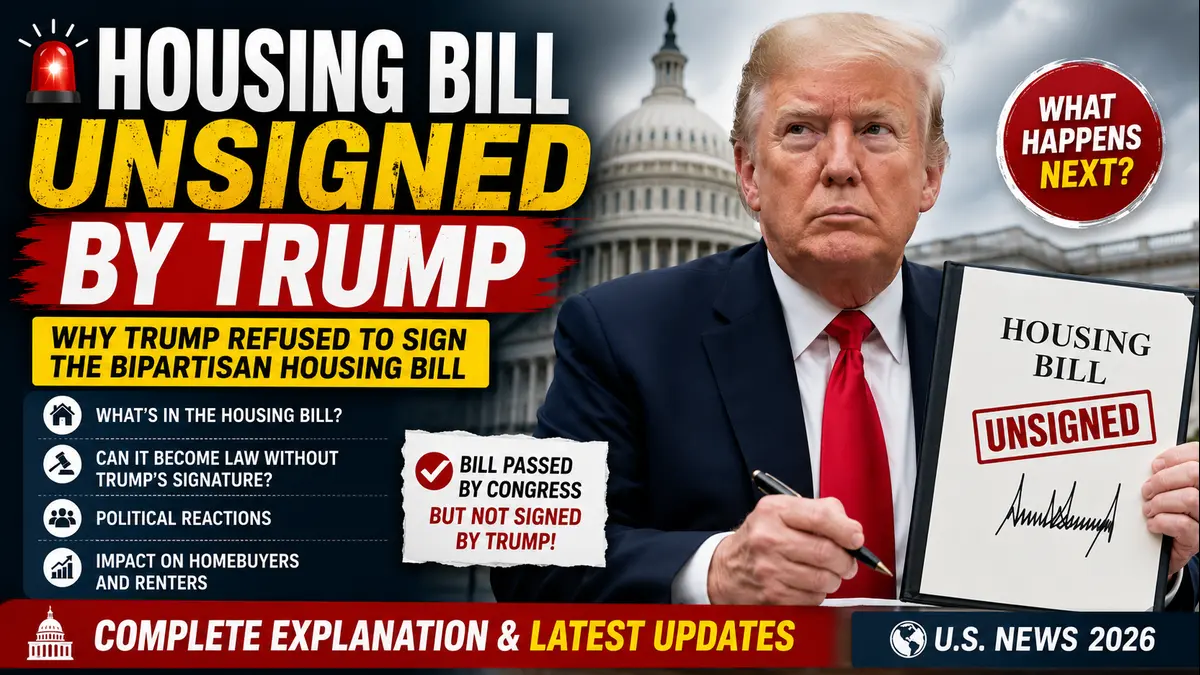
Housing Bill Unsigned Trump has become one of the most searched political topics in the United States after President Donald Trump announced that he would not sign the bipartisan housing legislation passed by Congress. The decision has sparked debate among lawmakers, economists and housing advocates across the country.
Although President Trump chose not to sign the bill, the legislation may still become law under the U.S. Constitution if the required legal conditions are met. This article explains why Trump withheld his signature, what the housing bill contains and what it means for American homeowners, renters and the housing market.
President Donald Trump said he would not sign the bipartisan housing bill because he wanted Congress to prioritize his preferred legislation, known as the SAVE America Act. According to his public statements, he believes election-related legislation should receive attention before additional housing reforms.
The decision was political rather than based solely on the contents of the housing bill. Trump stated that withholding his signature was intended to send a message to Congress regarding his legislative priorities.
Yes. Under the U.S. Constitution, a bill approved by both the House of Representatives and the Senate can still become law even if the President does not sign it, provided the President neither signs nor vetoes it within the constitutional time period while Congress remains in session. This process is uncommon but fully recognized under federal law.
Because of this constitutional provision, the Housing Bill Unsigned Trump story has attracted national attention. Many legal experts have explained that a president's refusal to sign does not automatically stop legislation from taking effect.
If implemented, the legislation aims to improve housing affordability by encouraging new housing construction and reducing barriers that slow residential development. Supporters believe these measures could help address housing shortages in many parts of the United States.
The Housing Bill Unsigned Trump decision has received mixed reactions. Supporters of the legislation argue that housing affordability should remain a bipartisan priority regardless of other political disagreements. Meanwhile, President Trump's supporters say his decision reflects broader concerns about congressional priorities and his preference for advancing election-related legislation first.
The phrase Housing Bill Unsigned Trump is trending because many Americans are trying to understand why President Trump chose not to sign the bipartisan housing bill and whether the legislation can still become law. The topic has generated significant discussion among political analysts, economists, real estate professionals and voters.
| Topic | Information |
|---|---|
| President | Donald Trump |
| Issue | Bipartisan Housing Bill |
| Status | Unsigned by the President |
| Main Reason | Political disagreement over legislative priorities |
| Can it still become law? | Yes, under certain constitutional conditions |
President Donald Trump said he withheld his signature because he wanted Congress to prioritize the SAVE America Act before advancing the bipartisan housing legislation.
Yes. Under the U.S. Constitution, if the President neither signs nor vetoes a bill within the required time while Congress remains in session, it can become law.
The legislation focuses on expanding affordable housing, encouraging new construction, supporting zoning reforms and improving housing availability across the United States.
The topic is trending because many Americans are searching for the reasons behind President Trump's decision and its potential impact on the U.S. housing market.
If implemented, the legislation aims to increase housing supply and improve affordability, although the long-term impact will depend on how the law is carried out.
Housing Bill Unsigned Trump has become one of the biggest political stories in the United States. Although President Donald Trump declined to sign the bipartisan housing bill, the legislation may still become law under constitutional procedures. The debate highlights the ongoing differences between political priorities and housing policy while millions of Americans continue to follow developments closely.
For official legislative updates and bill status, visit Congress.gov.