Perseid Meteor Shower 2026: Peak Date, Best Viewing Time, Where to Watch & Complete Guide
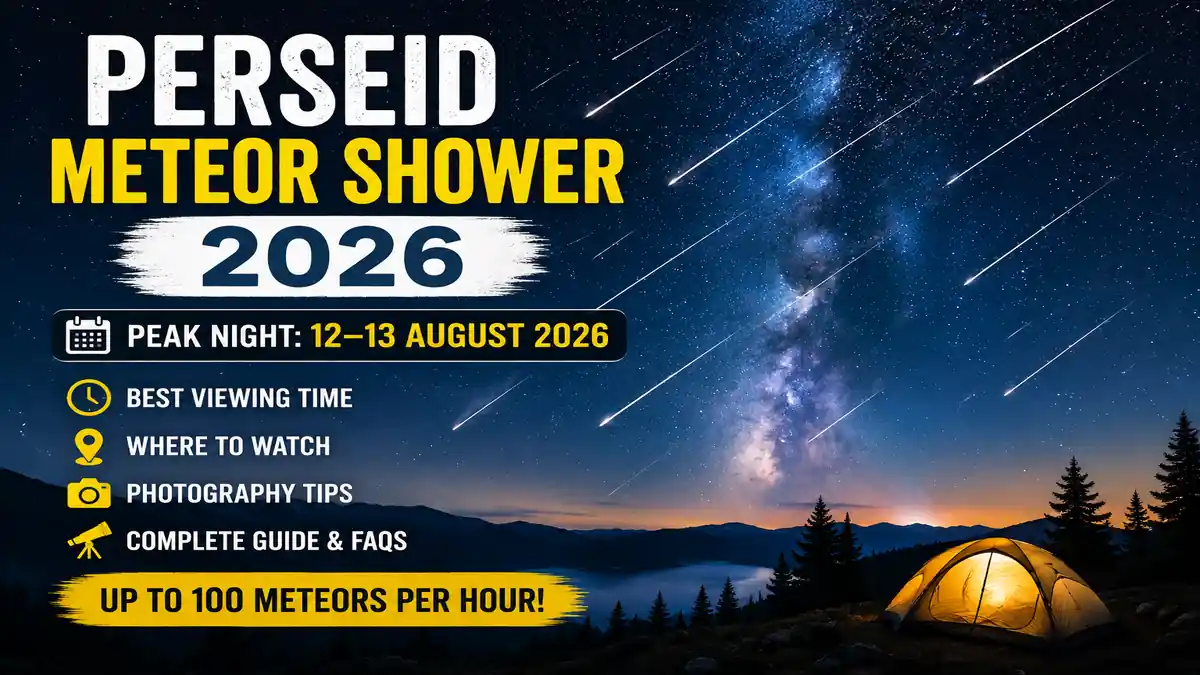
Perseid Meteor Shower 2026 is expected to be one of the most spectacular astronomical events of the year. The meteor shower will be active from 17 July to 24 August 2026, with its peak occurring on the night of 12–13 August 2026. Thanks to the New Moon, skywatchers may enjoy exceptionally dark skies and potentially see up to 50–100 meteors per hour under ideal conditions. 0
This complete guide covers the Perseid Meteor Shower 2026 peak date, best viewing time, locations, visibility tips, scientific facts, and FAQs.
📑 Table of Contents
Perseid Meteor Shower 2026 Peak Date
| Event | Details |
|---|---|
| Meteor Shower | Perseid Meteor Shower 2026 |
| Active Period | 17 July – 24 August 2026 |
| Peak Night | 12–13 August 2026 |
| Expected Meteors | 50–100 per hour |
| Best Hemisphere | Northern Hemisphere |
The peak activity is expected overnight on 12–13 August 2026, when observers in dark locations may witness dozens of meteors every hour. 1
What is the Perseid Meteor Shower?
The Perseid Meteor Shower occurs every year when Earth passes through the dust trail left by Comet 109P/Swift-Tuttle. Tiny particles enter Earth's atmosphere at extremely high speeds and burn up, creating the bright streaks popularly known as "shooting stars." 2
Best Viewing Time
- Best Night: 12–13 August 2026
- Best Time: Midnight until dawn
- Ideal Sky: Dark, cloud-free location
- No Telescope Required
- Allow 20–30 minutes for your eyes to adapt to darkness
- Look generally toward the northeast, though meteors can appear anywhere in the sky.
How to Watch the Perseid Meteor Shower
- Move away from city lights.
- Find an open area with a wide view of the sky.
- Lie back and watch the sky without binoculars.
- Avoid looking at mobile phones or bright lights.
- Be patient, as meteors appear at irregular intervals.
Interesting Facts
- The Perseids are among the brightest annual meteor showers.
- They are produced by debris from Comet Swift-Tuttle.
- Some meteors create spectacular "fireballs."
- The shower is visible every August.
- 2026 offers excellent viewing conditions because of the New Moon.
````3